01 Why Gates Sag
A gate is the one part of your fence that moves. A fixed run of panels just stands there, but a gate swings open and shut hundreds of times a year — kids, dogs, the trash cans, the mower. Every one of those swings puts leverage on the frame, the hinges, and the post they hang from. So when a gate starts to drag, scrape, or refuse to latch, it’s telling you one of three things went wrong: the frame is weak or unbraced and has racked out of square, the hinges are undersized for the weight they carry, or the gate post has shifted in the clay and pulled the whole gate out of plumb. Get any one of those wrong and the gate sags — usually within the first couple of seasons.
Hinges, Latches, and the Gate Post
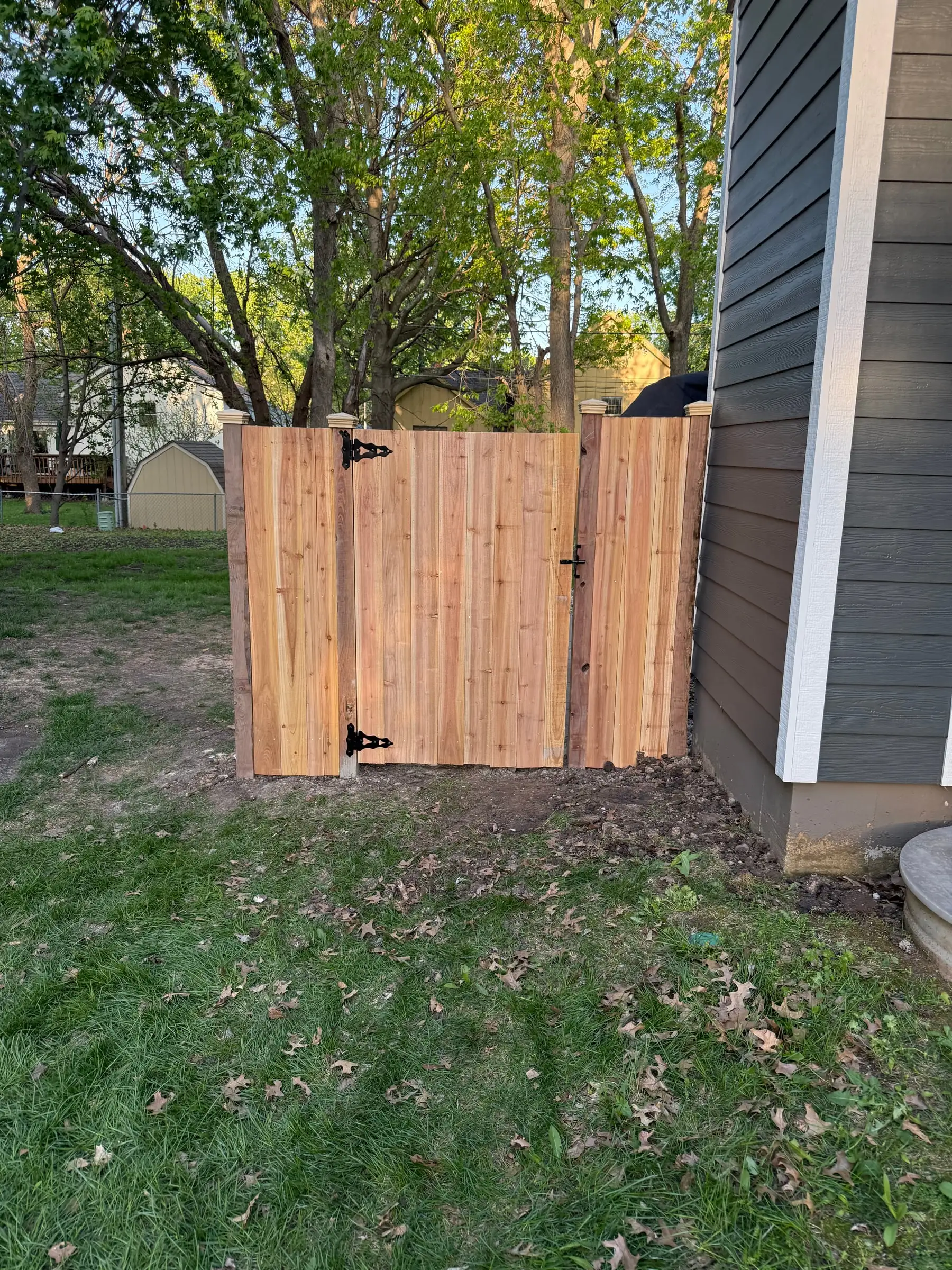
A square frame still needs something solid to hang from. That starts with heavy-duty hardware — hinges rated for the actual weight and width of the gate, not the lightweight strap hinges that come bagged with a kit. Undersized hinges flex, work loose, and let the gate droop at the latch side until it won’t close. Just as important is the gate post itself: it carries the entire swinging load, so it has to be a solid post set in concrete, deep enough to stay put when the clay swells and shrinks. If the post leans even slightly, the gate leans with it. Frame, hinges, and post all have to be right together — a perfect frame on a wobbly post still sags.
Can a Sagging Gate Be Fixed?
Often, yes. If the rest of the fence is sound, a sagging gate can usually be brought back to true by re-squaring the frame (adding or tightening the diagonal brace), replacing failed hinges with properly rated hardware, and resetting the gate post in fresh concrete if it has shifted. The fix that lasts is the one that addresses the real cause rather than just shimming the symptom — so we’ll look at the frame, the hardware, and the post together and tell you honestly which need attention. See our gate service ›