Mon–Sun 8a–6p  ·  (214) 656-0663
Picket Pros Fencing · North Dallas

Picket Pros Blog

U-Channel vs. Pipe Steel Fence Posts: Which Is Better?

“Steel posts” has become a selling point in North Texas — but there are two very different kinds, and they don’t perform the same.

By The Picket Pros crew, Celina TXUpdated June 17, 20264 min read

Free, itemized written quotes from a licensed crew based in Celina. Permits and HOA paperwork handled.

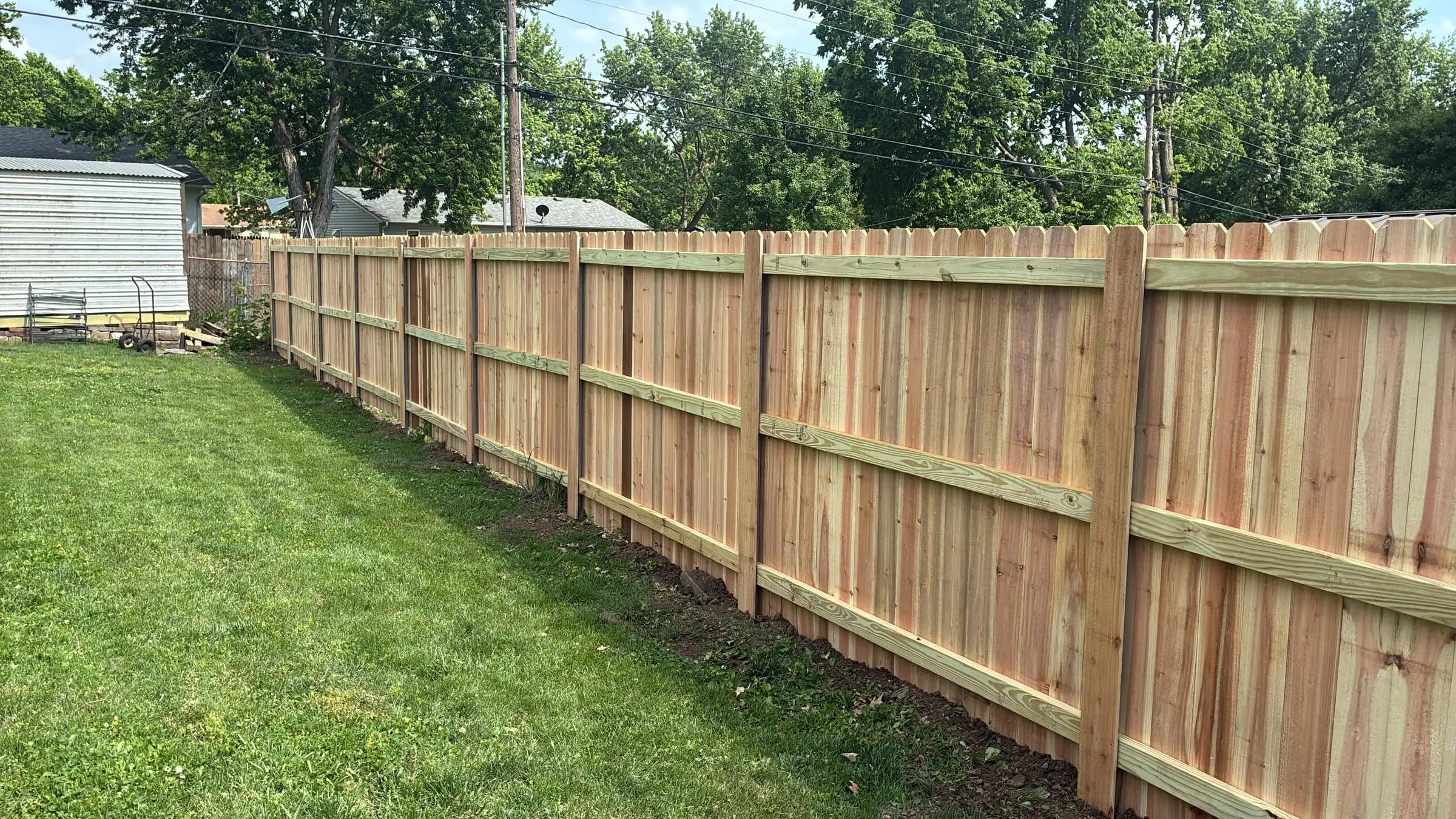
Cedar privacy fence built on steel posts along a side yard
Cedar on steel postsPicket Pros project photo

More and more North Texas homeowners have figured out that steel fence posts beat wood — steel doesn’t rot at the ground line, and it doesn’t heave the way a driven wood post does in our expansive clay. So “steel posts” has become a selling point. The catch: when one contractor says steel posts and another says steel posts, they may be talking about two completely different post systems that perform very differently. The two you’ll run into are round galvanized pipe and U-channel, and the differences are worth understanding before you sign a contract.

01

The Two Kinds of Steel Fence Post

  • Round pipe posts are exactly what they sound like: galvanized steel tubes — the same posts that hold up a chain-link fence. The wood rails get bolted to the outside of the round post with brackets.
  • U-channel posts are a flat-faced steel channel (a C-shaped section) made specifically for wood fencing. Instead of bracketing rails onto the outside, the rails seat down into the channel and fasten there.

Both are steel. Both are galvanized. From there, they go in very different directions — literally.
Round pipe post versus hidden U-channel post, seen from above Top: a round galvanized pipe post sits proud of the fence boards, with the rail attached by an exposed bracket. Bottom: a flat U-channel steel post with the wood rail seated inside the channel and a cover picket hiding the steel. ROUND PIPE · COMMON bare pipe bracket Pipe sits proud of the boards; the rail hangs on a bracket bolted to the outside. HIDDEN U-CHANNEL · PICKET PROS cover picket U-channel The rail seats inside the channel and a cover picket hides the steel.
Plan view, not to scale: pickets face the yard (bottom of each drawing), rails face the back. A U-channel post grips the rail across its full width and disappears behind the wood.
02

Directional Strength: Putting the Steel Where the Load Is

A fence really only faces load from one direction that matters: wind pushing it broadside, trying to fold it over. Out here that’s no small thing — the open, windy stretches across Collin and Denton counties put real, repeated pressure on a fence, on top of the clay working at its base (the Texas A&M AgriLife Extension documents just how much our Blackland Prairie clay swells and shrinks with the weather). The post’s whole job is to resist that bending.

Here’s where geometry matters. A round pipe is symmetric — it has the exact same strength in every direction. That sounds good until you realize a fence post only gets pushed in one direction, so most of that pipe’s strength is aimed at loads it will never see. A U-channel is directional: turned the right way, its depth runs in the same line as the wind load, so it concentrates its stiffness exactly where the fence needs it. It’s the same reason a 2×4 is far stiffer standing on edge than lying flat — same steel, aimed at the load. Pound for pound, a properly oriented U-channel gives you more usable strength against the thing that actually topples fences.

03

A Cleaner, More Integrated Fence Line

How the rails attach is the other big difference, and it changes how the whole fence holds together.

With round pipe, the rails are bracketed onto the outside of the post. That leaves exposed hardware, a little bump-out at every post, and — more importantly — a bolted bracket that becomes the weak point that works loose over years of wind. The round post also interrupts the line of the fence instead of joining it.

With U-channel, the rails slide straight into the channel and fasten there, so the post becomes part of the rail run — one continuous, rigid structure with no exposed brackets. The channel grips the full width of the rail, which stiffens the whole panel and keeps boards from twisting or pulling away. The fence reads as a single integrated unit instead of wood hung off a row of metal poles.

04

Aesthetics: Visible Metal vs. Hidden Steel

This is the difference your neighbors will actually notice. A round pipe post sits proud of the boards — a bare metal pole showing every eight feet down the line. No matter how nice the cedar is, it always looks a little like a metal-post fence.

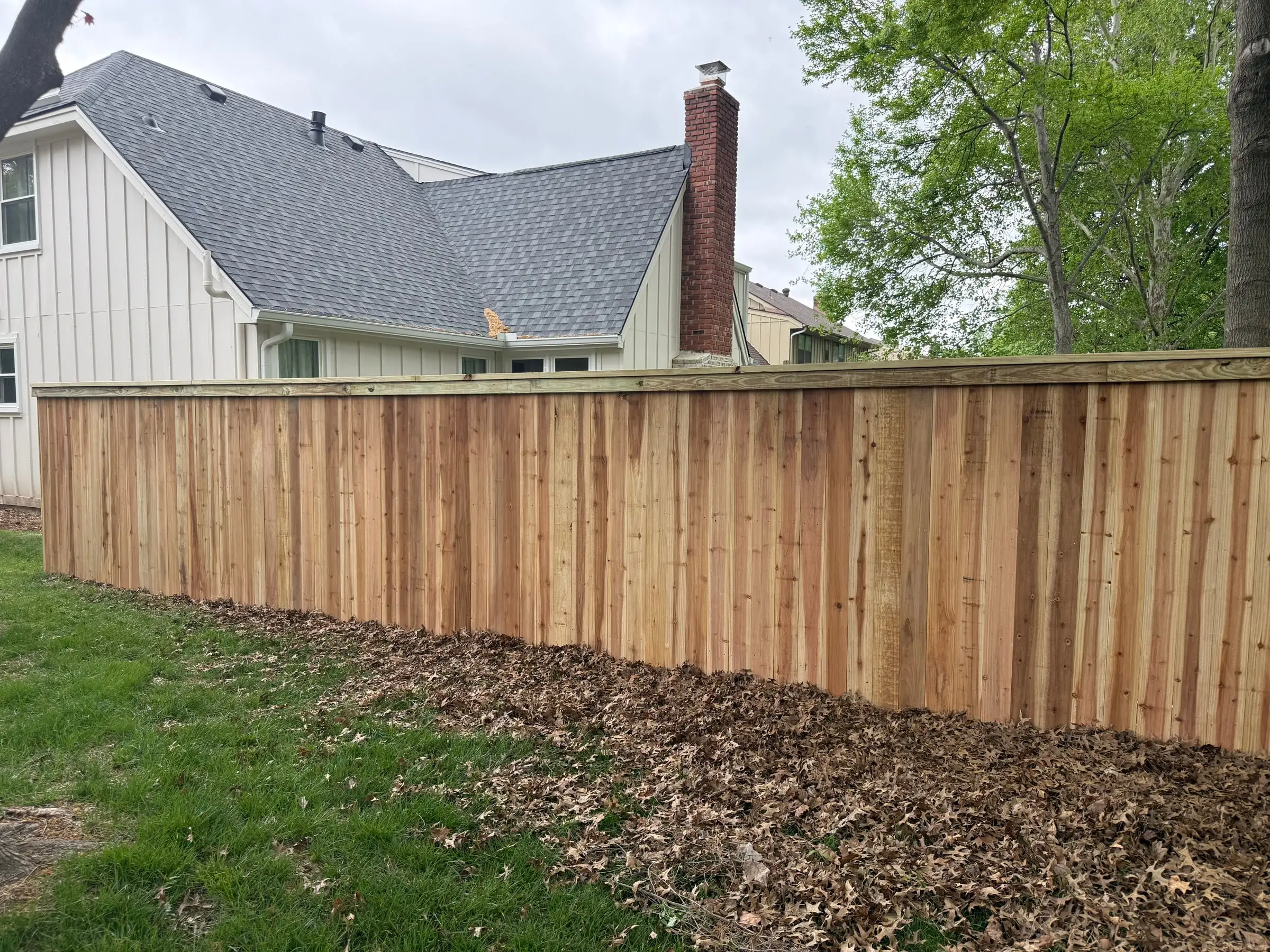
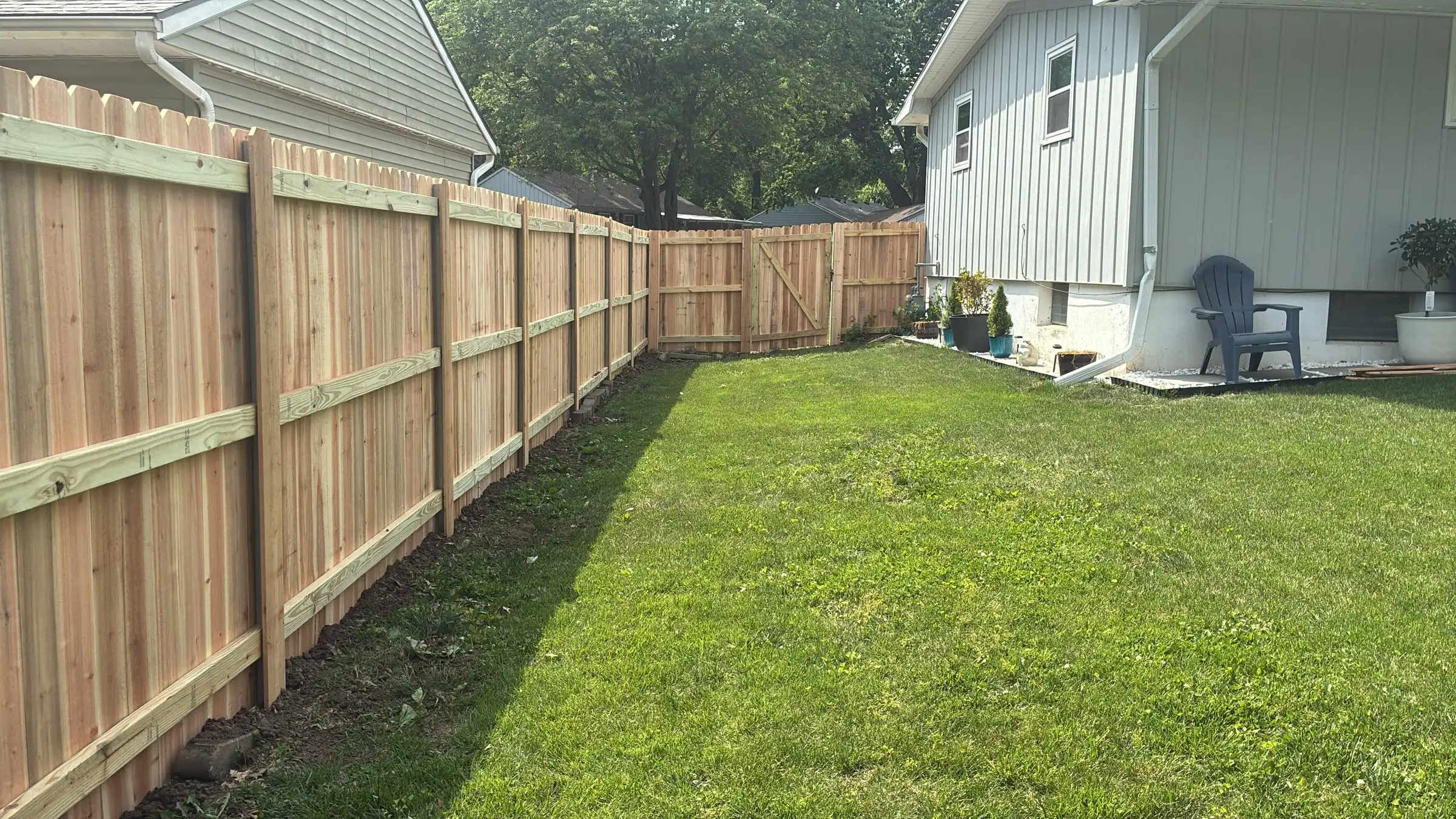
Because a U-channel has a flat face, the pickets mount to the rails like any standard wood fence and we finish each post with a cover picket — so the steel disappears completely behind the wood. From the street it’s a 100% natural cedar fence, with none of the exposed pipe. You get the strength of steel and the look of real wood, which is the whole point.

05

What About Durability and Cost?

On pure durability, the two are close — both are galvanized steel, and both run circles around a wood post that rots and heaves (we break that down in our guide on steel vs. wood fence posts). The real trade-off is this: round pipe is cheaper and faster because it’s repurposed chain-link hardware. U-channel is purpose-built for wood privacy fences, so it costs a bit more to install. What you’re paying for is the directional strength, the clean integrated line, and the hidden, all-wood look — not just “steel.”

06

What We Build — and Why

We build every wood fence on hidden U-channel steel posts wet-set in concrete. It’s the post system engineered for exactly what a North Texas wood fence faces — wind on the panels, clay at the base — and it looks like wood doing it. If a contractor quotes you “steel posts,” it’s worth one simple question: pipe, or U-channel? The answer tells you how the fence will hold up and how it’ll look. Building new or replacing an old leaner across North Dallas? We’re glad to walk you through it. See fence installation or fence replacement.

Questions

Frequently Asked Questions

What’s the difference between U-channel and pipe fence posts?

Round pipe is a galvanized tube (chain-link hardware) with rails bracketed to the outside. U-channel is a flat-faced steel channel made for wood fencing — the rails seat into the channel and a cover picket hides the post, so the steel disappears behind the wood.

Are U-channel posts stronger than pipe posts?

For a fence, effectively yes. A round pipe spreads its strength equally in all directions; a U-channel is directional, so it concentrates its stiffness in the one direction a fence is actually loaded — against the wind pushing it over. Pound for pound, that’s more usable strength where it counts.

Can you see the steel post in a U-channel fence?

No. The flat face lets us cap each post with a cover picket, so from the street it looks like a 100% natural cedar fence with no exposed metal — unlike round pipe, which stays visible.

Does Picket Pros use U-channel or pipe posts?

U-channel, on every wood fence we build, wet-set in concrete. It gives the directional strength, the clean fence line, and the hidden all-wood look that round pipe can’t.

Free written quotes

Steel strength, with the look of real wood.

Get a free, no-obligation quote on a cedar fence built on hidden U-channel steel posts. We measure on site and handle permits and HOA paperwork.

Call Free Quote