
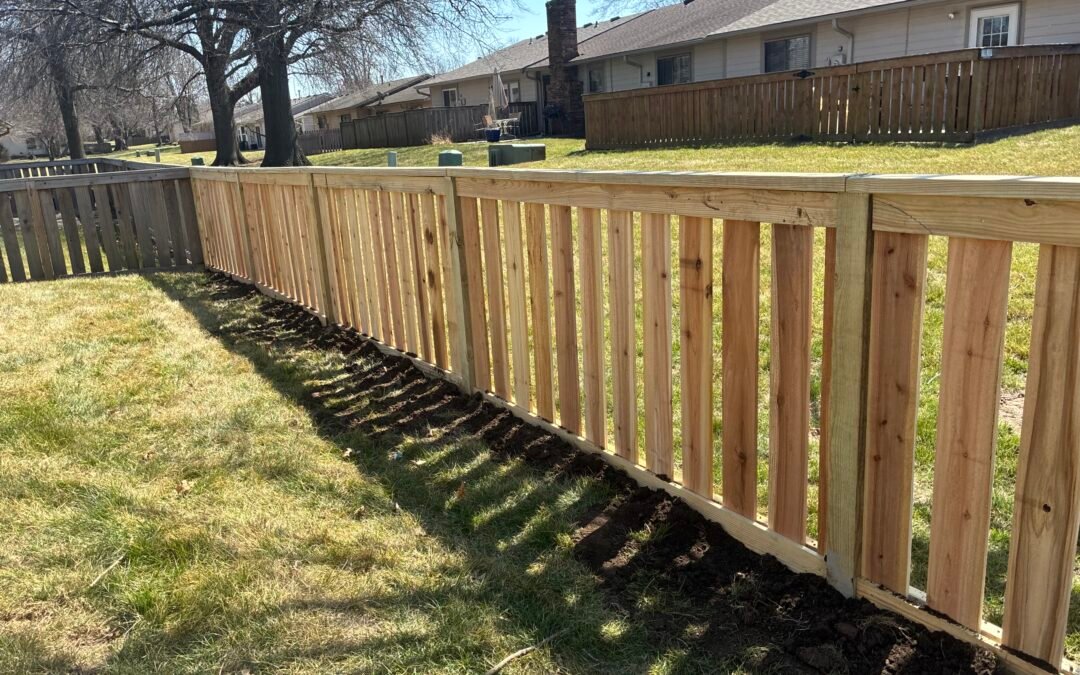
Dry Pack vs Wet Set Fence Posts: What’s Best for Your Fence in Kansas City?
Your fence is only as strong as the posts holding it up.
If you’ve been researching fence installation, you’ve probably come across two common methods: dry packing and wet setting fence posts. Some contractors swear by one, others argue for the other—and for homeowners, it can be confusing trying to figure out what actually matters.
At Picket Pros, we’ve installed fences all across the Kansas City metro—from Olathe to Overland Park to Lee’s Summit—and we’ve seen firsthand what works long-term in our soil and weather conditions.
👉 Need a quote for your fence project? Visit https://picketpros.com or request a free estimate today.
In this guide, we’re breaking down:
- What dry pack and wet set methods actually are
- The real differences between them
- Common mistakes that cause fences to fail
- And why proper technique matters more than the method itself
What Is Dry Packing for Fence Posts?
Dry packing is a method where dry concrete mix is poured directly into the post hole, compacted tightly, and then water is introduced afterward to activate the curing process.
At Picket Pros, our process looks like this:
- Set the post in position
- Pour dry concrete mix around the post
- Tamp and compact the material thoroughly
- Introduce water after compaction to begin curing
The key here is control—you’re able to tightly pack the concrete around the post before hydration, which eliminates air pockets and creates a dense, stable base.
What Is Wet Setting for Fence Posts?
Wet setting involves mixing concrete with water before pouring it into the hole. The mixture is already activated and is poured in a semi-liquid state around the post.
Typical process:
- Mix concrete with water
- Pour slurry into hole
- Set and brace post while curing
This method is often seen as more “traditional,” but it comes with its own set of challenges—especially if not executed properly.
Dry Pack vs Wet Set: What’s the Real Difference?
At a high level, both methods aim to achieve the same result: a stable, long-lasting fence post. The difference comes down to how the concrete is handled before it cures.
Compaction & Density
- Dry Pack: Allows for aggressive tamping, resulting in tighter compaction
- Wet Set: Relies on flow and settling, which can leave voids if not managed carefully
Control During Installation
- Dry Pack: Greater control over post alignment and stability during install
- Wet Set: Posts can shift more easily before curing
Risk of Installation Error
- Dry Pack: Requires proper technique (especially tamping and water control)
- Wet Set: Can be weakened if overwatered or mixed incorrectly
Real-World Testing: Does Dry Pack Actually Hold Up?
In real-world testing like the example above, properly installed dry pack posts have been shown to perform just as well as wet-set posts in terms of strength and durability.
👉 The takeaway:
The method itself isn’t the problem—poor execution is.
Why Proper Technique Matters More Than the Method
This is where most homeowners (and honestly, many contractors) get it wrong.
A fence doesn’t fail because it was dry packed or wet set—it fails because:
- The concrete wasn’t compacted properly
- Water wasn’t controlled correctly
- The post wasn’t set securely during installation
At Picket Pros, we use a controlled dry pack method because it allows us to focus on the details that actually determine long-term performance.
The Right Way to Dry Pack Fence Posts
Dry packing done correctly is a very deliberate process—not just dumping a bag of concrete into a hole.
1. Proper Tamping (The Most Important Step)
Tamping is what separates a strong install from a weak one.
When we dry pack:
- We compact the concrete in stages
- We eliminate air pockets and voids
- We ensure tight contact between the post and surrounding material
👉 Poor tamping = loose soil pockets = post movement over time
2. Controlled Water Introduction
Dry pack does NOT mean “no water.” It means controlled hydration.
At Picket Pros:
- We add water after full compaction
- We allow moisture to distribute evenly through the mix
- We avoid oversaturating the hole
Why this matters:
- Too little water = incomplete curing
- Too much water = weakened concrete
3. Maintaining Post Alignment
Because the concrete is compacted before curing:
- Posts stay exactly where they’re set
- Less movement during installation
- Cleaner, straighter fence lines
Why Dry Pack Gets a Bad Reputation
Let’s be honest—dry packing has a reputation problem in some circles.
But almost every time, it comes down to bad installs, not the method itself.
Common Mistakes:
- Dumping dry mix without tamping
- Adding water only at the top
- Not allowing proper curing
- Rushing the install process
- Failing to check plumb during compaction
👉 These mistakes lead to loose, unstable posts—and that’s what people blame on “dry pack.”
Kansas City Soil & Weather: Why It Matters
Fence installation isn’t one-size-fits-all—especially in the Kansas City area.
We deal with:
- Heavy clay soils
- Seasonal expansion and contraction
- Freeze/thaw cycles
- Heavy spring rain
These conditions mean:
👉 Post stability over time matters more than initial strength alone
A properly compacted dry pack install performs extremely well in these conditions because it:
- Reduces voids that lead to movement
- Maintains consistent support around the post
- Holds up through seasonal soil changes
When Wet Setting Can Go Wrong
Wet setting isn’t bad—but it’s very easy to get wrong.
Common issues:
- Overwatering the mix (too “soupy”)
- Concrete separating or weakening
- Posts shifting before curing
- Inconsistent curing due to moisture levels
👉 A poorly mixed wet set can actually be weaker than a properly executed dry pack.
What We Recommend at Picket Pros
At Picket Pros, we use a dry pack, tamp-first, water-after method because it gives us:
- Maximum control during installation
- Strong, compacted concrete around every post
- Consistent, repeatable results across every job
We don’t cut corners, rush installs, or rely on shortcuts.
We focus on:
- Straight lines
- Solid posts
- Long-term durability
👉 Because the goal isn’t just installing a fence—it’s building one that lasts.
Final Verdict: Dry Pack or Wet Set?
Here’s the truth:
Both methods can work when done correctly.
But:
- Poor technique = failure (regardless of method)
- Proper technique = long-lasting fence
At Picket Pros, we’ve found that controlled dry packing with proper tamping and water management delivers consistent, high-quality results in Kansas City conditions.
Get a Fence Built the Right Way
If you’re considering a new fence, don’t just ask what method a contractor uses—ask how they install their posts.
That’s where the real difference is.
👉 Get a free quote today: https://picketpros.com
📍 Serving Kansas City, Olathe, Overland Park, Lee’s Summit, and surrounding areas
Frequently Asked Questions
Is dry packing fence posts strong enough?
Yes—when properly compacted and hydrated, dry pack concrete can be just as strong as wet-set concrete.
Do fence posts last longer with dry pack or wet set?
Longevity depends on installation quality, not just the method. Proper technique is the biggest factor.
Can dry pack concrete cure without mixing first?
Yes. When water is introduced after compaction, the concrete hydrates and cures properly.
What causes fence posts to become loose?
The most common causes are poor compaction, improper water use, and installation shortcuts—not the method itself.
What’s the best method for Kansas City fences?
Both methods can work, but in Kansas City’s soil conditions, proper compaction and moisture control are critical—making technique more important than method.